
Over the last year or so I have been running a project with my colleague Javier Tejera to develop a new model for academic-led generative AI for teaching. No-one needs more enterprise AI platforms promising automation and ‘efficiency’ gains. What we do need are ways of supporting academic teams to develop apps which actually meet a direct teaching need within their own subject and discipline, and are owned and designed by the academics involved. We see this as a way of exploring preferable futures for AI in teaching.
With a very small technical development team comprising Javier and a group of fabulous PhD interns (Kokulan Thangasuthan, Anna Kapron-King and Yvonne Ding) we are working with around 20 groups of academics – from many different disciplines – to create AI supported apps for them to use with their classes. Here are three examples:
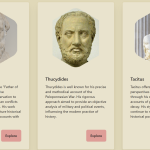
Voices from the Past: Marc Di Tommasi in our School of History, Classics and Archaeology has used the entire writing corpus of eight renowned historians to create virtual personas (from Herodotus to Adam Smith). These allow students to engage in dynamic conversation with historians of the past to support debate in class.

EnviroForum: Valentina Erastova and Nicholle Bell in our School of Chemistry have created a set of personas for students working on environmental issues. These allow students to conduct realistic interviews with stakeholders such as land managers, government advisors, environmental protection officers and engineers working in areas such as nuclear waste management, peatland restoration and plastic recycling.

The Virtual Ward: Simon Maxwell and colleagues from our Medical School are using AI to generate realistic case scenarios that allow students to practice clinical decision-making. They can interrogate detailed cases, trial their diagnostic skills and receive appropriate, evidence-based feedback.
All the apps are designed to be used in class, allowing academic teams to fully support them – the apps do not ‘replace’ the teaching team, they enable alternative kinds of teaching which are engaging and interesting in new ways. Feedback to date suggests students really like them, and some of our teams are seeing improvements in student performance too.
A bit more about all ten apps and the project here – at the moment only those with a University of Edinburgh login can use them, but we are working on opening these up to the sector over the course of 2026. We will also be developing another eight new apps.
If you’d like to know more, please feel free to drop me an email.